How to Transport a Car Across India?
How to Transport a Car Across India: The Ultimate Guide
Relocating across the country is a major milestone—and moving your car safe and sound from one state to another is often one of the biggest items on your moving checklist. Whether you are shifting from Bengaluru to Delhi, Mumbai to Kolkata, or any other long-distance route, driving thousands of kilometers isn't always practical or safe.
Here is your comprehensive, step-by-step guide on how to transport your car across India smoothly and securely.
1. Choose the Right Mode of Transport
When moving a car across long distances in India, you generally have two main options:
Covered Car Containers (Recommended): Your vehicle is loaded inside a large, fully enclosed car carrier truck. This protects your car from highway weather, flying stones, dust, and road debris during transit. It is the safest choice for long-distance intercity moves.
Open Car Carriers: Your car is mounted onto an open multi-car trailer alongside other vehicles. While slightly cheaper, your car remains exposed to sunlight, rain, and road dust during the trip.
2. Essential Documents Required
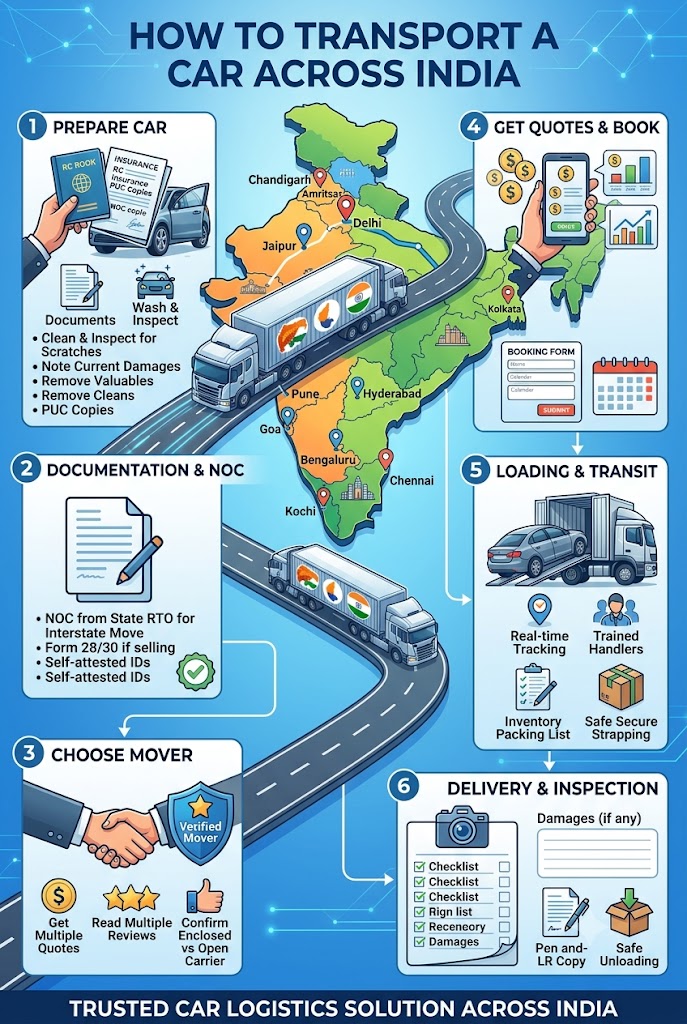
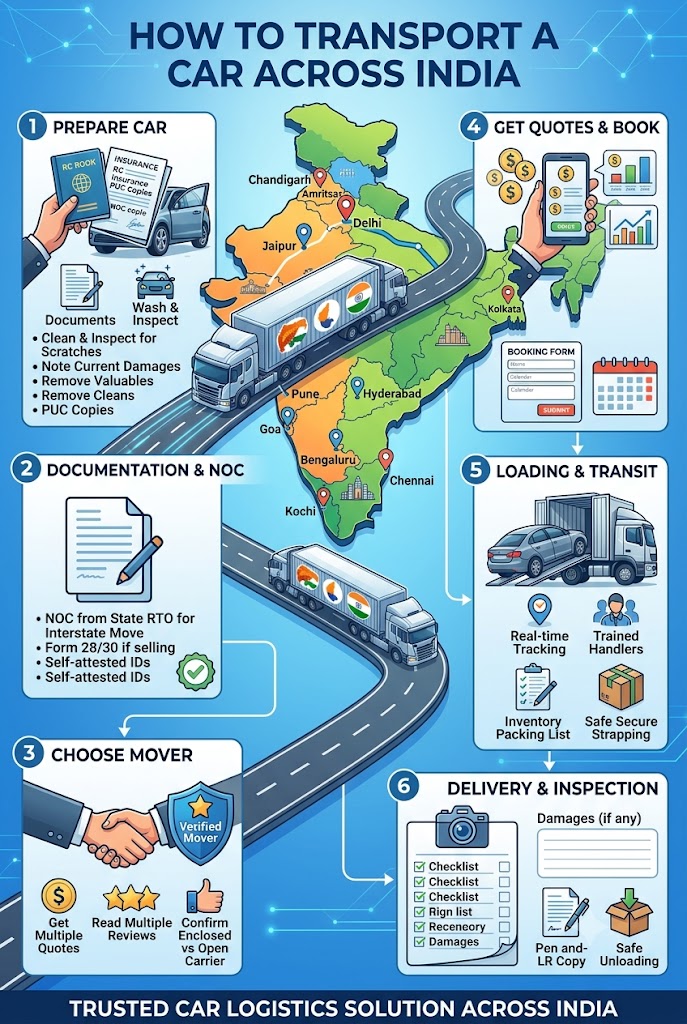
Before handovers, make sure you have self-attested photocopies (and originals for verification) of the following mandatory documents:
Registration Certificate (RC): Proof of vehicle ownership.
Valid Car Insurance Policy: Crucial for coverage during transit.
Pollution Under Control (PUC) Certificate: Must be current and valid.
Owner's Government Photo ID: Aadhaar Card, Driving License, or Passport.
No Objection Certificate (NOC): Required if you are permanently moving your car to a new state and plan to re-register it with the local RTO.
3. Pre-Transport Checklist & Vehicle Preparation
Taking a few simple precautions before loading your vehicle can prevent misunderstandings and transit damage:
Wash & Inspect: Clean your car thoroughly so existing dents, scratches, or paint chips are clearly visible.
Date-Stamped Photos & Videos: Take high-resolution photos and videos from all angles, including the odometer reading, dashboard, tires, and undercarriage.
Conduct a Joint Condition Report: Fill out the initial inspection paper (Vehicle Condition Report) alongside the transport agent and retain a signed copy.
Remove Personal Belongings: Clear out all loose items, GPS units, dashcams, fastags, toll cards, and valuable accessories. Movers generally do not accept liability for items left inside the cabin.
Keep Fuel Low: Maintain about 10% to 15% (1/4th tank) of fuel—just enough to drive on and off the carrier truck at both ends.
Check Mechanicals: Ensure tire pressure is correct, disable security alarms, and check for any existing fluid leaks.
4. Key Safety & Booking Tips
Opt for Transit Insurance: Always verify whether the transport quote includes Car Transit Insurance (typically covering accidental damage or total loss during transit).
Track Your Shipment: Choose a transport provider that offers GPS tracking so you can monitor your vehicle's progress across state borders.
Inspect Upon Delivery: Before signing the final delivery receipt, inspect the car in broad daylight, check the odometer against your initial photo, and verify that no new damage occurred during transit.
MoveABox Team
Expert team at MoveABox dedicated to making your relocation experience smooth and stress-free. We share professional insights, tips, and best practices from years of moving expertise.